
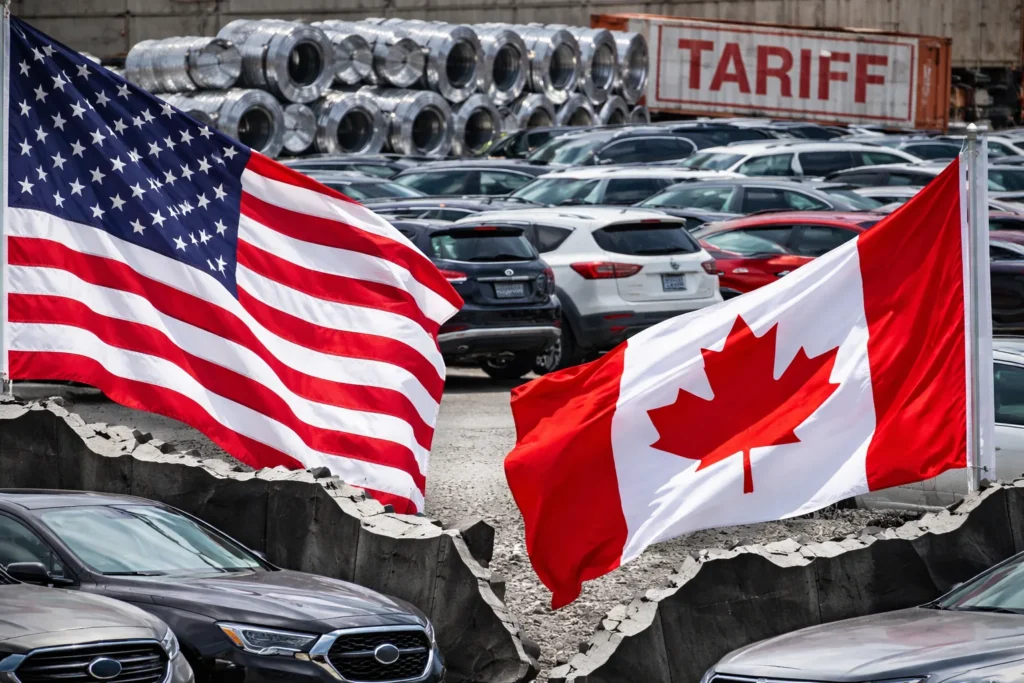
January 17, 2026- U.S. automakers are facing their steepest decline in Canadian market share in over a decade, as intensifying cross-border trade tensions continue to reshape North America’s integrated auto supply chain. According to Statistics Canada, only 36% of passenger vehicles imported into Canada in the first 10 months of 2025 originated from U.S. factories, down sharply from a 10-year average of 49%.
The drop comes amid a retaliatory tariff war, sparked by renewed protectionist policies under the current U.S. administration. Ottawa’s imposition of import duties on U.S.-made vehicles, in response to American steel and aluminium tariffs, has made U.S. exports less competitive with those of European and Asian counterparts. Automakers such as Stellantis and Ford are reportedly reassessing Canadian logistics and production strategies as a result.
The shift signals more than just a loss in market share; it highlights a weakening of the traditionally seamless North American auto ecosystem established under NAFTA and restructured under USMCA. Analysts warn that prolonged trade disruption could accelerate structural changes, including investment redirection to Mexico or offshore facilities.
Meanwhile, non-U.S. brands, particularly those from Korea, Japan, and Germany, have capitalized on the pricing gap and lack of tariffs to gain significant ground in Canadian showrooms. With no clear resolution to the trade standoff, Canadian dealers and consumers are adapting to a new normal, one where the stars and stripes are no longer dominant on their driveways.
Source: Bloomberg