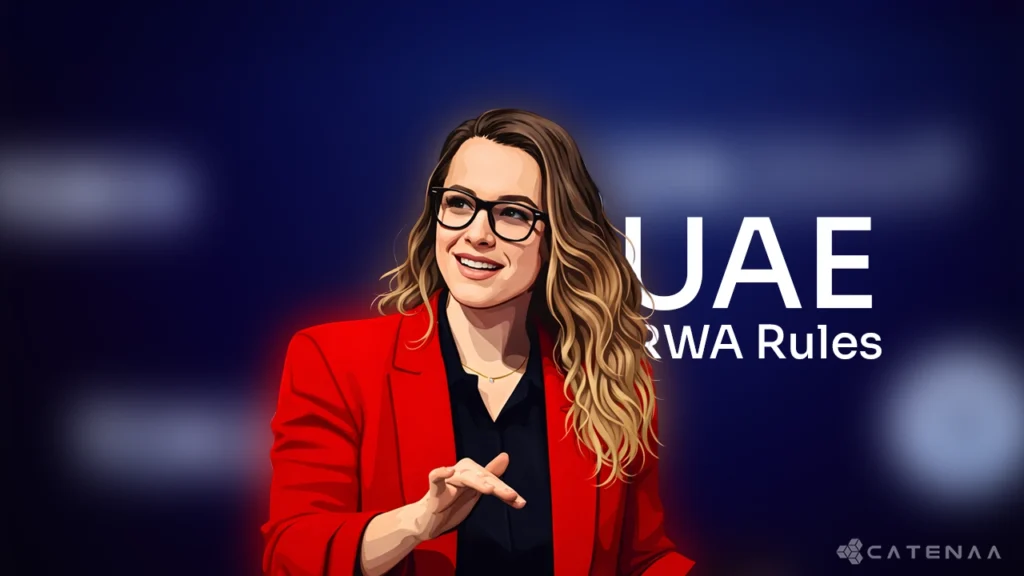
Catenaa, Monday, February 23, 2026- Irina Heaver, founder of NeosLegal, told attendees at Consensus Hong Kong that real-world asset tokenization in the United Arab Emirates depends more on legal structure than technology.
Speaking during Consensus Week in Hong Kong, Heaver focused on regulatory design, Virtual Asset Service Provider licensing and asset structuring in Dubai and Abu Dhabi. She said tokenization projects often fail due to weak legal foundations rather than technical limits.
Heaver has structured more than 300 Web3 and crypto projects since 2016. Her advisory work spans commodities, private credit, venture structures and institutional RWA platforms operating in the UAE.
She outlined what she described as a legal blueprint for compliant blockchain deployment. The framework begins with proper asset-holding entities and legally defined token rights.
It then maps regulatory classification, custody arrangements, governance planning and licensing obligations before issuance.
In Dubai, digital asset activities generally fall under the Virtual Assets Regulatory Authority. Certain RWA projects may require issuer approval or a VASP license, depending on structure and distribution.
In Abu Dhabi, projects operating within Abu Dhabi Global Market are regulated by the Financial Services Regulatory Authority under a separate framework.
Heaver said misclassifying regulatory pathways remains one of the most costly errors in RWA deployment. She advised founders to align business activity with licensing requirements before token issuance.
The session highlighted rising institutional interest in compliant tokenization models as the UAE strengthens its position in regulated digital asset markets.